An independent community heritage project

The heritage projectPeoplePratap Chandra Ray

Pratap Chandra Ray

Pratap Chandra Ray, also written Pratap Chandra Roy, was a Calcutta bookseller and publisher associated with bringing Indian classics to a wider readership.

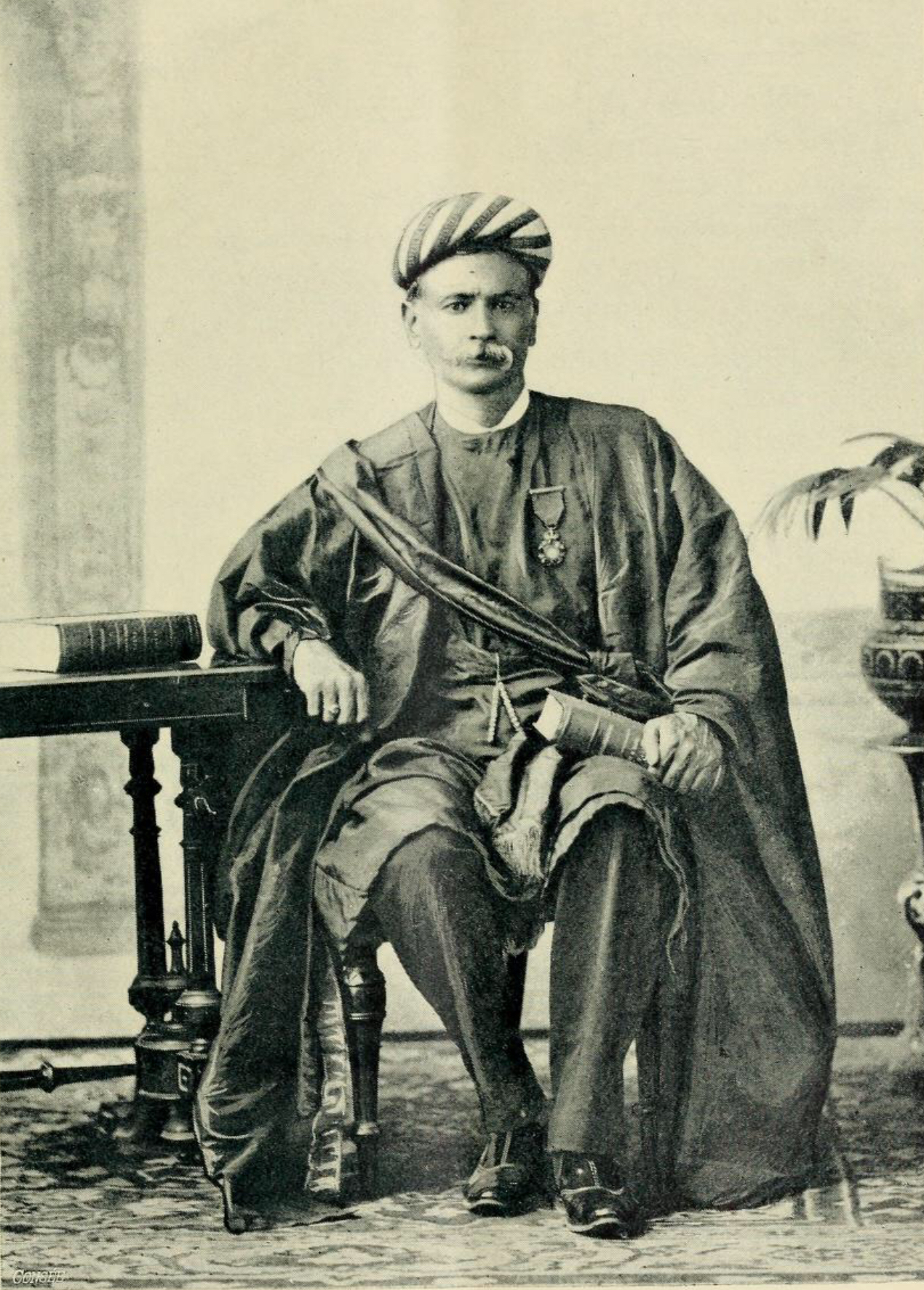
Pratap Chandra Ray seated beside a table with books, wearing a turban and a medal
Portrait from an early Mahabharata volume; dated 31 December 1894 in the Wikimedia Commons catalogue. Photographer unidentified; marked public domain in India. Original scanned volume.

Publishing · Sanskrit literature · English readership

Life and work

1842–1895 · Publisher of the English Mahabharata[1]

Pratap Chandra Ray, also written Pratap Chandra Roy, was a Calcutta bookseller and publisher associated with bringing Indian classics to a wider readership. He undertook the publication of a complete English prose Mahabharata, which appeared in instalments between 1883 and 1896.[2]

The enterprise joined Ray’s work as publisher with the translation of Kisari Mohan Ganguli. Ray published the first fourteen parvas, or books; after his death, his widow, Sundari Bala Roy, published the remaining four. The publisher’s preface to a later edition explains how Ganguli’s initial anonymity led some editions to credit the translation incorrectly to P. C. Roy. Recognising both men’s roles preserves the achievement of the publisher and the authorship of the translator.[2]

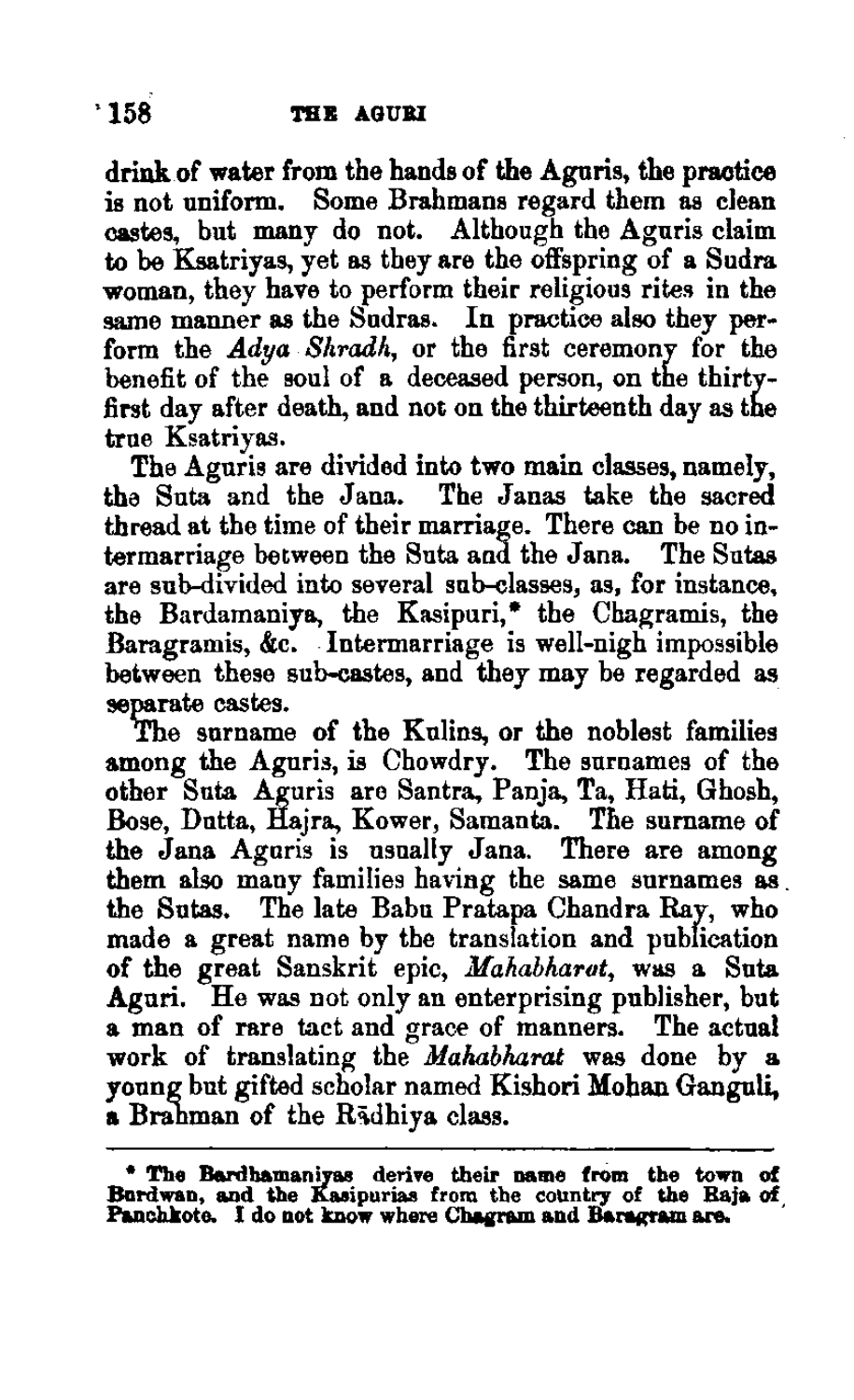
His place in this community collection has a direct historical source. In Hindu Castes and Sects (1896), p. 158, Jogendra Nath Bhattacharya identifies “Pratapa Chandra Ray” as a Suta Aguri and praises his enterprise as a publisher. The passage connects Aguri history with a major undertaking in nineteenth-century literary publishing.[3]

Dutta also discusses Pratap Chandra Roy of Sanko among the community’s notable cultural figures (p. 313). His account provides a further scholarly reference for Ray’s place in Aguri history; the publication record cited above distinguishes Ray’s publishing work from Ganguli’s translation.[4]

Read about Bhattacharya’s account ↗ · See the original reference on p. 158
Explore all featured personalities →

How the collection was selected

Read further

Notes & sources

  1. Pratāpacandra Rāya (Pratap Chandra Roy), Wikidata authority record. Consulted 14 September 2026. Used narrowly for the lifespan and name variants, not for community identity or attribution of the Mahabharata translation. Source details
  2. The Complete Mahabharata in English: publisher’s preface. Publisher’s preface consulted 14 September 2026. Used for the publication history and division of roles; the website does not follow later misattributions of the translation to Roy. Source details
  3. Jogendra Nath Bhattacharya, Hindu Castes and Sects (1896), contents p. x and pp. 156–158. Evidence of Bhattacharya’s classification and account, not official army recruitment or a regiment. His caste hierarchy, scriptural genealogy and character stereotypes are historical claims, not present-day facts. The chapter prints the translator’s name as “Kishori Mohan Ganguli”; the profile uses Kisari Mohan Ganguli, as credited in the Mahabharata edition’s publisher’s preface. Source details
  4. Achintya Kumar Dutta, “Prosperity, Dominance, and Social Mobility: Emergence of a Mobile Caste in Colonial Southwest Bengal” (2023), pp. 297–324. Complete chapter, including endnotes and references, read directly in the supplied book. Page references use its printed pagination. Origin hypotheses remain attributed to the author. Link opens the publisher’s book record. Source details

Search the heritage project

Enter a word or phrase to begin.

For Bengali text inside the journals, use the journal reader.