An independent community heritage projectEnglish edition Bengali to follow

The heritage projectPeople

Lives behind the history

Aguri personalities in public service, medicine, cinema, education and journalism.

Meet personalities associated with the Aguri community whose lives span public service, medicine, cinema, teaching and journalism. Their biographies, photographs and published recollections connect individual achievements with Bengal’s wider history.[1]

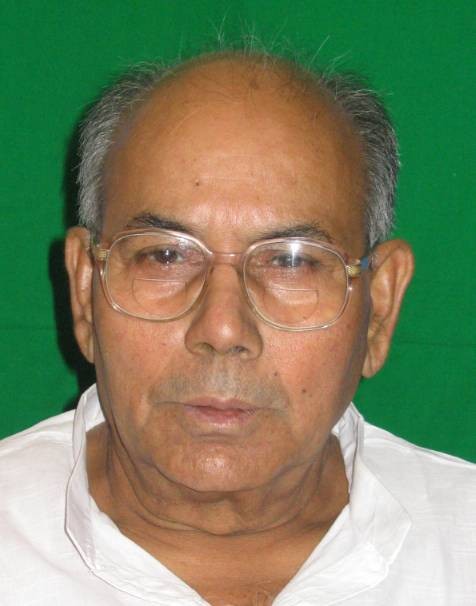
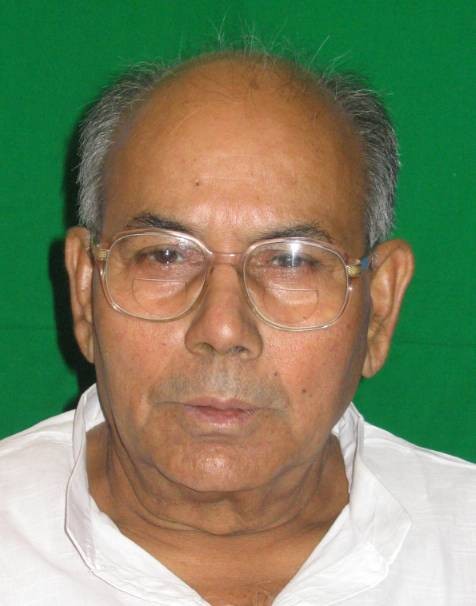
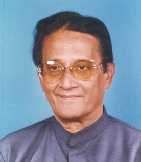
Official parliamentary portrait of Ajit Kumar Panja
Parliament of India, Lok Sabha. Original portrait, via Wikimedia Commons. GODL–India.

Law · Parliament · Theatre

Ajit Kumar Panja

1936–2008 · Former Union minister

Ajit Kumar Panja brought a lawyer’s training and an interest in the arts to a long public career. Born in Calcutta, he studied at Scottish Church College and Lincoln’s Inn, London. He served in the West Bengal Legislative Assembly and state government before entering the Lok Sabha in 1984.[2]

He represented Calcutta North-East through six successive Lok Sabhas, from the Eighth to the Thirteenth (1984–2004). His Union responsibilities included information and broadcasting, finance, coal and external affairs. Parliament’s tribute also remembered his writing in English and Bengali and his work as a stage actor.[3]
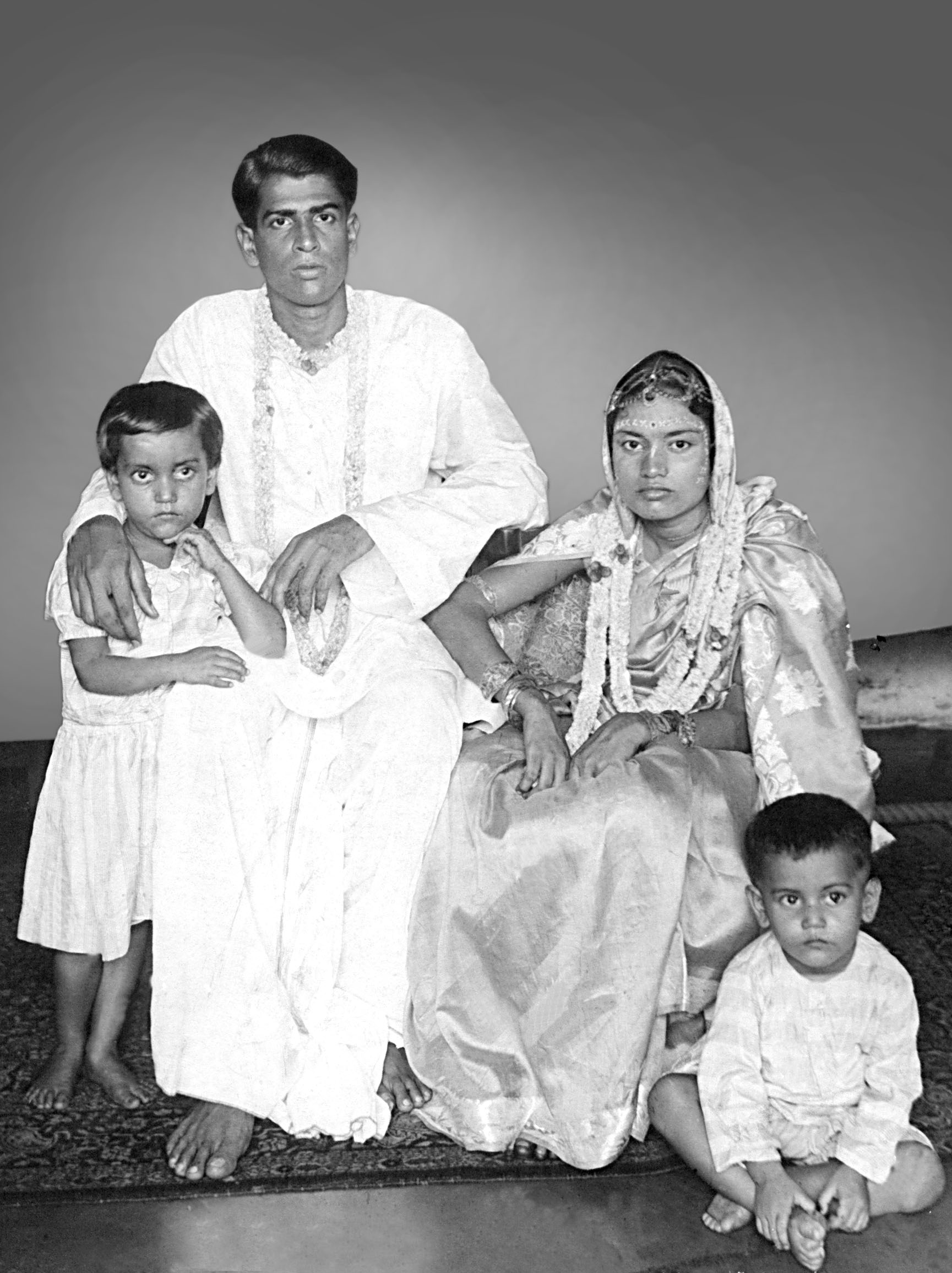
Hare Krishna Konar and Biva Konar with two children in an early family photograph
Hare Krishna Konar with Biva Konar; dated 1941 in the Commons catalogue. Credited there to West Bengal State Archives; marked public domain in India. The children are not identified in the catalogue.

Peasant movements · Land reform

Hare Krishna Konar

1915–1974 · Peasant organiser and state minister

Hare Krishna Konar was a revolutionary and peasant organiser whose public life became closely associated with West Bengal’s agrarian politics. After his release from imprisonment in 1938, he worked in the peasant movement. He later served as minister for land and land revenue in the United Front governments formed in 1967 and 1969.[4]

His work on surplus and benami land connects his biography to the wider history of cultivation, landholding and rural political organisation. The remembrance used here was written by a political colleague; its perspective and inconsistencies are explained in the source catalogue.[4]

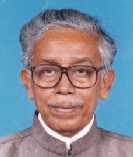
Official parliamentary portrait of Dr Ranjit Kumar Panja
Parliament of India, Lok Sabha. Original portrait. Reproduced with attribution under GODL–India.

Medicine · Teaching · Parliament

Dr Ranjit Kumar Panja

1932–2006 · Dermatologist and parliamentarian[5][6]

Ranjit Kumar Panja combined a career in medicine with public service. His parliamentary biography records his education at Medical College, Calcutta, and the Royal College of Physicians, Edinburgh. He taught dermatology at Medical College, Calcutta, where he was a professor from 1974 to 1990.[5]

Elected to the Twelfth Lok Sabha from Barasat in 1998, he served on the Committee on Human Resource Development and its medical-education subcommittee. His biography also records research publications, professional leadership in dermatology and medical camps for rural communities in West Bengal.[5]

Bengali & Hindi cinema

Shakti Samanta

Director and producer · Founder of Shakti Films

Born in Burdwan, Shakti Samanta built a career across Hindi and Bengali cinema. He founded Shakti Films in 1957. The company’s account credits him with directing 43 feature films, including six in Bengali, and lists Howrah Bridge, Aradhana, Kati Patang, Amar Prem and Amanush among his best-known works.[7]

His work in both languages provides a link between Bengal’s cultural life and a wider film audience. The studio records Filmfare Best Film awards for Aradhana, Anuraag and Amanush.[7]

A portrait will be added when a photograph with documented reuse permission is available.

Agrarian politics · Political writing

Benoy Krishna Konar

1930–2014 · Peasant organiser and legislator

Benoy Krishna Konar, also written Binoy Konar, was Hare Krishna Konar’s younger brother. He emerged from the peasant movement in the Memari area of Burdwan and represented Memari in the West Bengal Assembly following the elections of 1969, 1971 and 1977. He became a leader of the state Kisan Sabha and president of the All India Kisan Sabha.[8][9]

An Anandabazar Patrika obituary recalls his long organisational career while also recording the controversy over his remarks during the Singur and Nandigram agitations. His Bengali essays and recollections are collected in Nirbachita Rajnoitik Prabandha, Smriti O Smaran, published by National Book Agency.[9][10]

Freedom movement · Journalism · Public service

Dasarathi Tah

1911–1980 · Freedom fighter, editor and legislator

Dasarathi Tah joined the Congress in 1930 and participated in the Salt Satyagraha and Quit India movements. His later political career included representing Raina in the West Bengal Assembly in the first general election after independence, and again in 1957 and 1967, first with the Kisan Mazdoor Praja Party and later the Praja Socialist Party.[11]

Journalism was another lasting part of his work. He edited and published Damodar, which began as a weekly before independence and later became a daily. A Bengali local-history account also remembers his wife, freedom fighter Roma Tah, keeping the paper running while he worked underground. Their story connects the region’s freedom movement with the practical work of sustaining a newspaper.[11][12]

Official parliamentary portrait of Nikhilananda Sar
Parliament of India, Lok Sabha. Original portrait. Reproduced with attribution under GODL–India.

Teaching · Local government · Parliament

Nikhilananda Sar

1936–2020 · Teacher and parliamentarian[13]

Born in Negun, also written Nigun, in Burdwan, Nikhilananda Sar combined teaching with a long career in rural public life. His parliamentary biography records an honours degree, teacher training and a diploma in English-language teaching. A Bengali obituary recalls his teaching at Amarun and Jabagram high schools and his involvement in peasant organising from 1958.[14][13]

He represented Mangalkot in the West Bengal Assembly and chaired the Burdwan Zila Parishad before entering Parliament. Elected from Burdwan in 1998, 1999 and 2004, he served in three successive Lok Sabhas. His Twelfth Lok Sabha biography records committee work on estimates and urban and rural development.[13][14]

How the collection was selected

These seven profiles follow the notable-person list in Wikipedia’s Aguri article, consulted in September 2026. That list supplies the community connection; the notes beside each biography identify the sources used for the person’s life and work.[1]

Read further

Notes & sources

  1. “Aguri (caste)” — reference article and bibliography. The listed community connections are attributed to this article. Life and career accounts are separately sourced; the underlying books have not all been checked. Source details
  2. Ajit Kumar Panja — Eleventh Lok Sabha biographical sketch. The reproduced biography was read directly; it describes the career as recorded during the Eleventh Lok Sabha. Source details
  3. Lok Sabha, obituary references, 10 December 2008 — Ajit Kumar Panja. Indexed text of the parliamentary record consulted. The archive’s PDF endpoint was intermittently unavailable during this review. Source details
  4. Biman Basu, “The Birth Centenary of Comrade HareKrishna Konar” (2014). A partisan remembrance, not an independent biography. It gives inconsistent Andaman dates and an age at death inconsistent with its own dates; those details are not repeated as settled facts. Source details
  5. Dr Ranjit Kumar Panja — Twelfth Lok Sabha biographical sketch. The reproduced biography was read directly. It is a period account, not a complete retrospective biography. Source details
  6. “Ranjit Panja dead” — The Telegraph. Death year corroboration only. Source details
  7. Shakti Samanta — Shakti Films / Aradhana Films biography. Studio account read directly. It gives 1925 as the birth year, differing from the 1926 widely reported elsewhere; this profile therefore omits a birth year pending resolution. No portrait from the studio is reproduced without reuse permission. Source details
  8. Benoy Krishna Konar — Wikipedia. Article read 13 September 2026. Source details
  9. “হরেকৃষ্ণ শতবর্ষেই প্রয়াত বিনয় কোঙার” — Anandabazar Patrika (15 September 2014). Bengali article read directly; used in an original English paraphrase. Source details
  10. বিনয় কোঙার, নির্বাচিত রাজনৈতিক প্রবন্ধ, স্মৃতি ও স্মরণ — National Book Agency. Title, author, language and publisher checked. Full book not consulted; no passage is quoted or summarised. Source details
  11. Dasarathi Tah — Wikipedia. Article read directly; the cited biographical dictionary passage has not been independently checked. Source details
  12. Krishna Saha, Bengali account of freedom fighter Dasarathi Tah — Krishak Setu. Bengali article consulted 13 September 2026. This local-history account is explicitly attributed; dramatic wartime claims are not repeated without corroboration. Source details
  13. Nikhilananda Sar obituary — Anandabazar Patrika (2020). Article read directly. The profile gives life years only: this obituary and Wikipedia differ on the precise July 2020 death date. Source details
  14. Nikhilananda Sar — Twelfth Lok Sabha biographical sketch. The reproduced period biography was read directly. Source details

Search the heritage project

Enter a word or phrase to begin.

For Bengali text inside the journals, use the journal reader.